
After World Mental Health Day, Are We Really Listening?
World Mental Health Day may have passed, but the need to listen and understand one another continues every day. Discover how giving people space to share their experiences, asking what support they need, and taking their voices seriously can help build meaningful connections. Sometimes, making a difference begins with being present and truly listening.
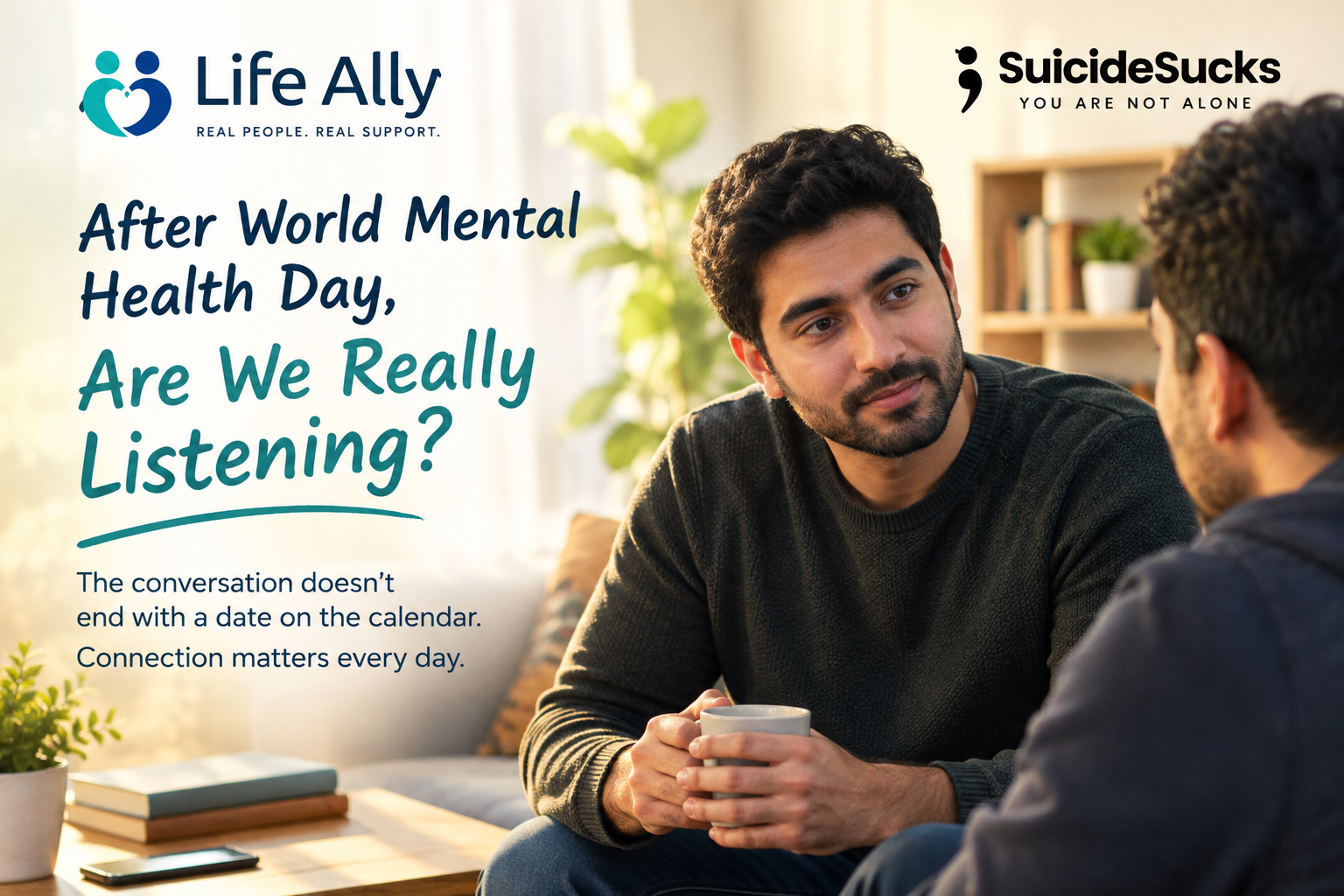
World Mental Health Day has passed. The posters will come down, the social posts will slow, and many of us will return to our routines. But one question from this year’s theme deserves to stay with us: when someone shares what they are going through, do we make room to hear them?
The World Health Organization’s 2026 theme, “Lived experiences heard: real voices, real change,” asks us to take people’s experiences seriously and let those voices shape the support and services built around them (World Health Organization [WHO], 2026). That starts with a simple act most of us can practice: listening without rushing to take over the conversation.
Listening Is More Than Waiting to Reply
When someone says, “I’ve been having a hard time,” it can be tempting to jump straight to advice. We may want to reassure them, compare their experience with our own, or find the perfect thing to say. Often, the more useful first step is a question: “Do you want to tell me more?”
Then give them time. Let a pause happen. Try not to turn their story into a problem you need to solve. You can ask, “Would you like me to listen, or would it help to think through a next step together?” That small choice gives the other person room to say what support would feel like to them.
Listening well does not mean agreeing with everything or pretending you have an answer. It means showing that the person in front of you does not have to earn your attention by explaining their feelings perfectly.
Being Heard Should Lead Somewhere
The WHO’s theme also makes an important distinction: asking people to share their stories is not enough if their perspectives are then left out of the decisions that affect them (WHO, 2026). In everyday life, that can mean checking back after a conversation, following through on what you offered, or asking what would actually be helpful instead of assuming.
At a community level, it means making space for people with lived experience to influence the support being offered. Their perspective can show where a process feels confusing, what makes it harder to reach out, or what kind of connection feels respectful. Those details matter.
A Conversation Can Be a Beginning
At LifeAlly, connection begins with a real person prepared to listen with care. Life Allies offer non-clinical peer support: conversation, encouragement, and companionship. They are not therapists or crisis professionals, and a conversation with an Ally is not a replacement for professional care. Sometimes, though, having a steady, nonjudgmental person to talk with can be a meaningful place to begin.
World Mental Health Day may last one day. Listening can happen tomorrow, next week, and in the ordinary moments when someone is deciding whether it feels safe to speak. We don’t need perfect words. We can start by staying present, asking what the person needs, and taking their answer seriously.
If you could use a thoughtful person to talk with, learn more about LifeAlly’s peer conversations at lifeally.org.
References
World Health Organization. (2026, October 10). World Mental Health Day 2026: Lived experiences heard: Real voices, real change. https://www.who.int/campaigns/world-mental-health-day/2026